EnergyXchange - A Renewable Energy Center
A Renewable Energy Center
66 EnergyXchange Drive, Burnsville, NC 28714 T: 828-675-5541
Alternate Energy


Episode 405 of UNC-TV’s Our State, the On-Air Magazine interviews EnergyXchange’s staff and residents to learn how the landfill is put to use.
Land Fill Gas
 Landfill gas is created by bacteria during the anaerobic decomposition of organic material contained in municipal waste. Moisture, temperature, and the types of waste effect the quantity of gas generated at any particular time. Landfill gas is typically composed of 50% methane, 45% carbon dioxide, and 5% other gases (hydrogen sulfide, VOC, etc.). Methane, the major component of landfill gas, is the fuel we use in our studios and greenhouses. Landfill gas is equivalent to half strength natural gas with about 500 BTUs per cubic foot.
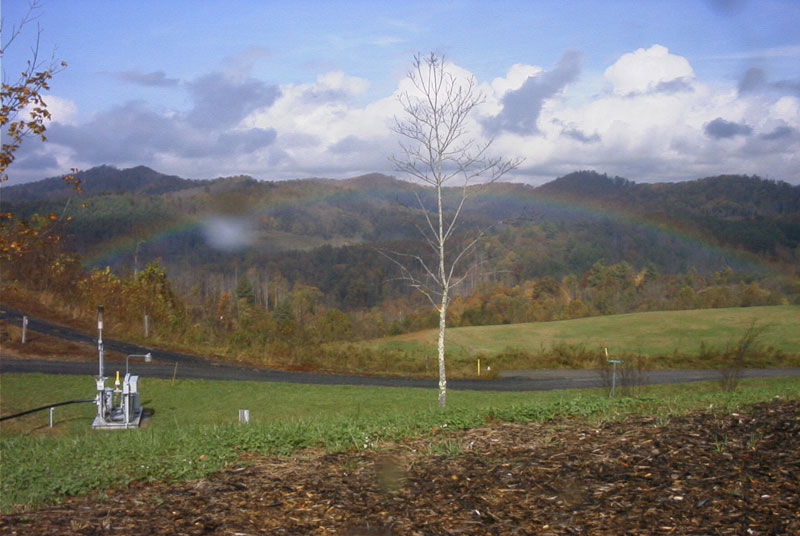
The 6 acre Yancey/Mitchell landfill is covered with 18 inches of compressed clay. This separates the municipal waste from the environment and allows the gas to be collected by wells dug into the waste. Collection wells are three feet in diameter and extend two thirds the depth of the waste. A perforated four inch pipe is placed in the well and backfilled with clean, washed stone. Gas is collected from the wells when a vacuum is applied to the wells. There are 10 wells on this landfill. The general rule of thumb for number of extraction wells is one well per acre of landfill. The wells are capped and connected by pipes to the blower/flare station. The gas is then piped to the appliances that burn the methane.
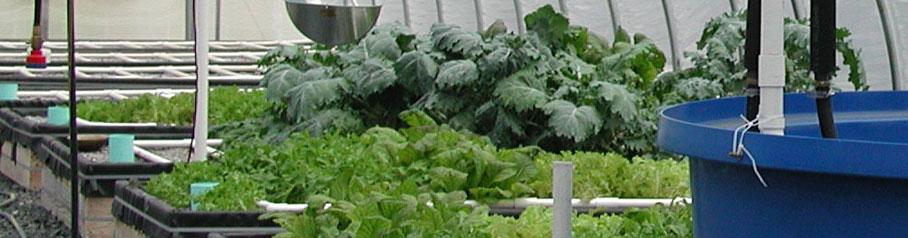
At this time the appliances that are burning landfill gas at EnergyXchange include a boiler for radiant heat, a clay kiln, glass furnace, two glass glory holes, and a pipe warmer. The flare station at EnergyXchange is used to equalize the demand for landfill gas. When all the appliances are in operation the flare does not burn landfill gas. When one of the primary appliances is shut off, the flare burns any excess gas to continue the reduction of greenhouse gas emission potential from the landfill. We have to continuously burn the excess gas, as storing it is not feasible.
LFG and Global Warming:
Most of us are aware of the greenhouse effect and global warming. Methane is considered a strong greenhouse gas. According to U.S. Environmental Protection Agency (EPA) figures (www.epa.gov/methane/sources.html), the global warming potential (GWP) of methane, a measure that uses carbon dioxide as a reference gas, is 21. A GWP of 21 means that over a period of 100 years, methane is 21 times more effective at trapping heat in the atmosphere than carbon dioxide. By removing and combusting methane from landfill gas, communities can help mitigate the potential damage from global warming. Landfill gas-to-energy projects provide communities with a low cost and responsible source of energy (compared to fossil fuels) and can contribute to the reduction of hazards and foul odors associated with landfills.
Capturing and burning the methane from the Yancey/Mitchell landfill is equivalent to planting 14,000 acres of trees!
More Photos: